Leading concrete 3D printer technology
3D concrete technology

Find your setup
Which robot, which printhead, for what?
Every setup is a robot, a printhead and the Vertico Slicer. Pick what you print to see which robots fit.
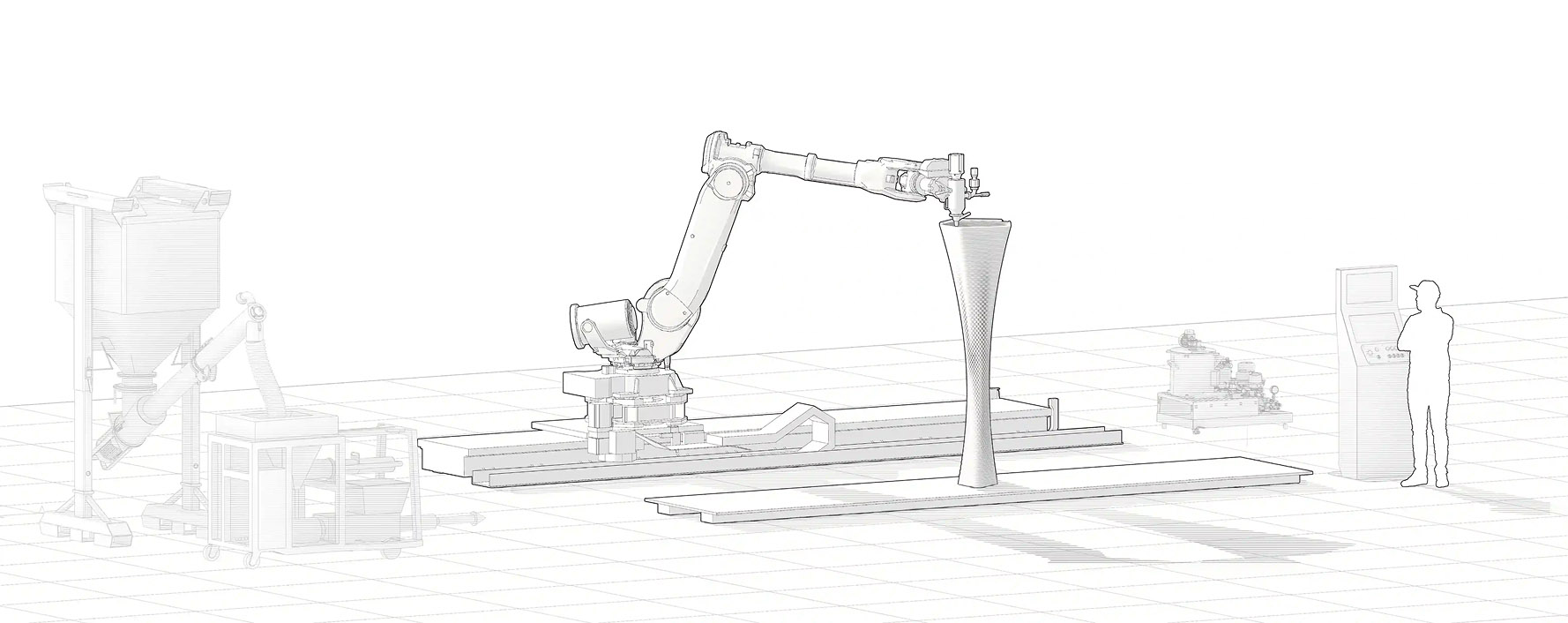
Robot on Track
The full system: a robot on a rail with silo, pump and HMI, for long elements and the largest print area.
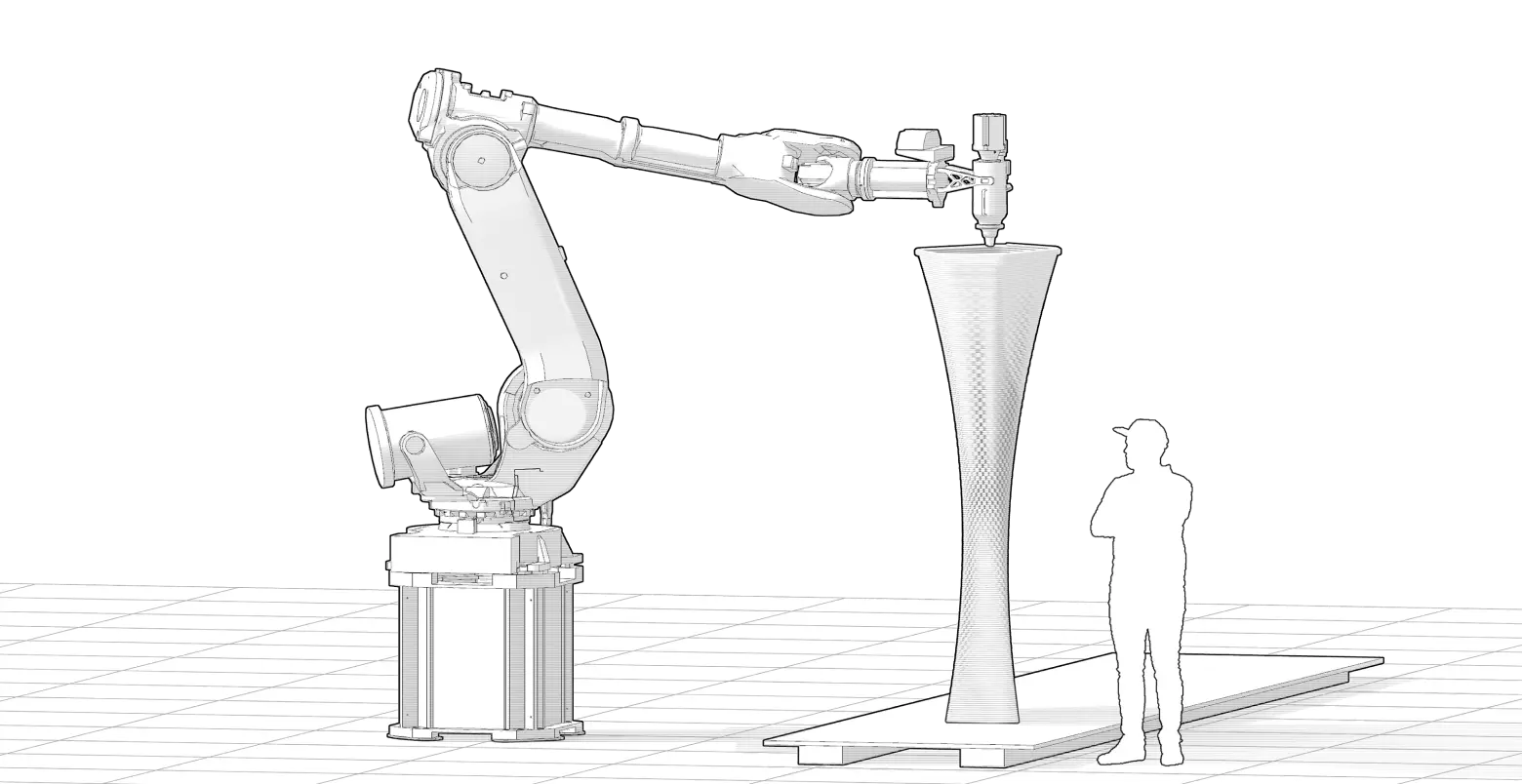
Solo
Long reach on a pedestal, printing 270 degrees around its base. On a mobile base it prints on site.
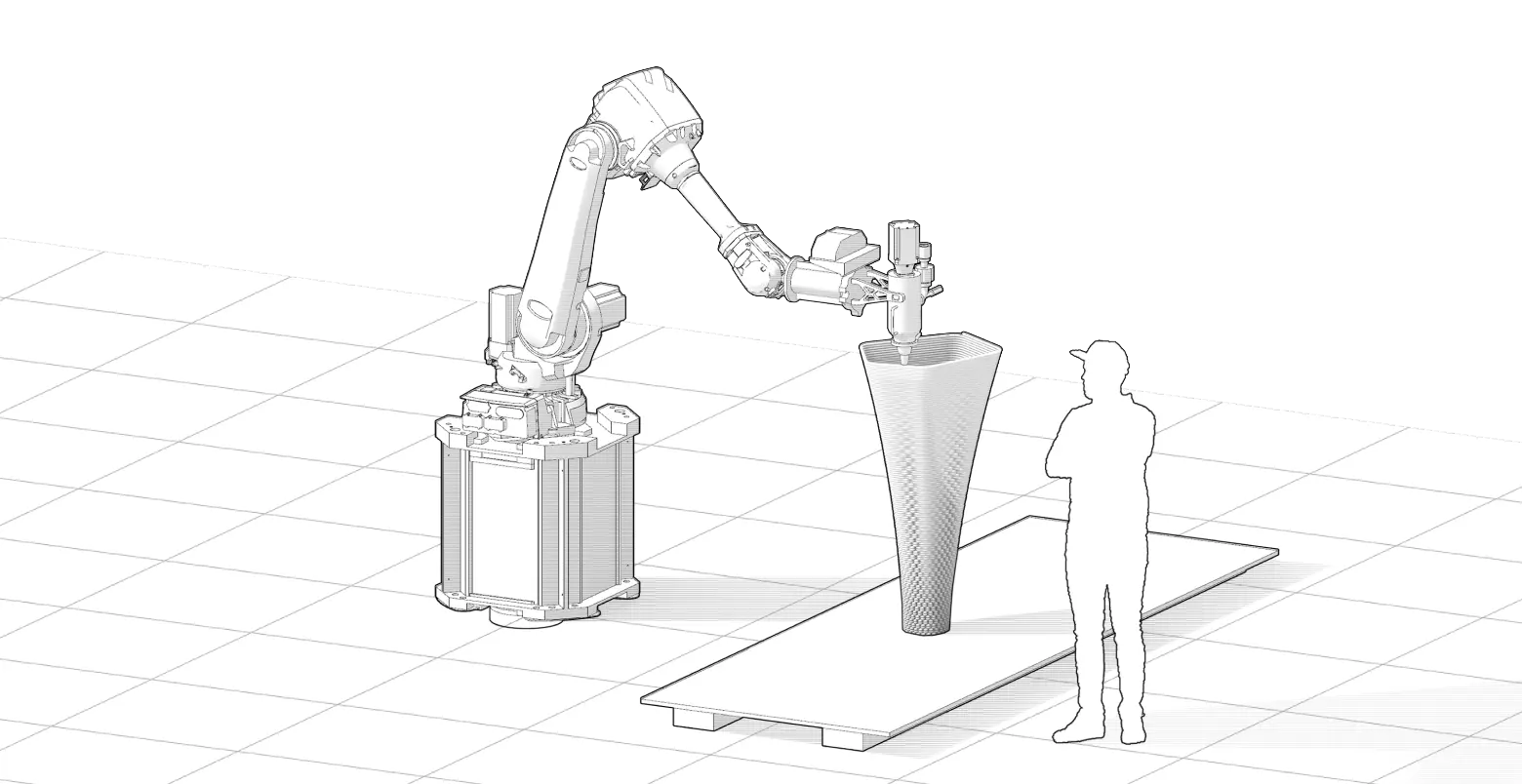
Compact
Full capabilities in rooms with ceilings from 2.7 m, with a 2.05 m reach and a lower floor load.
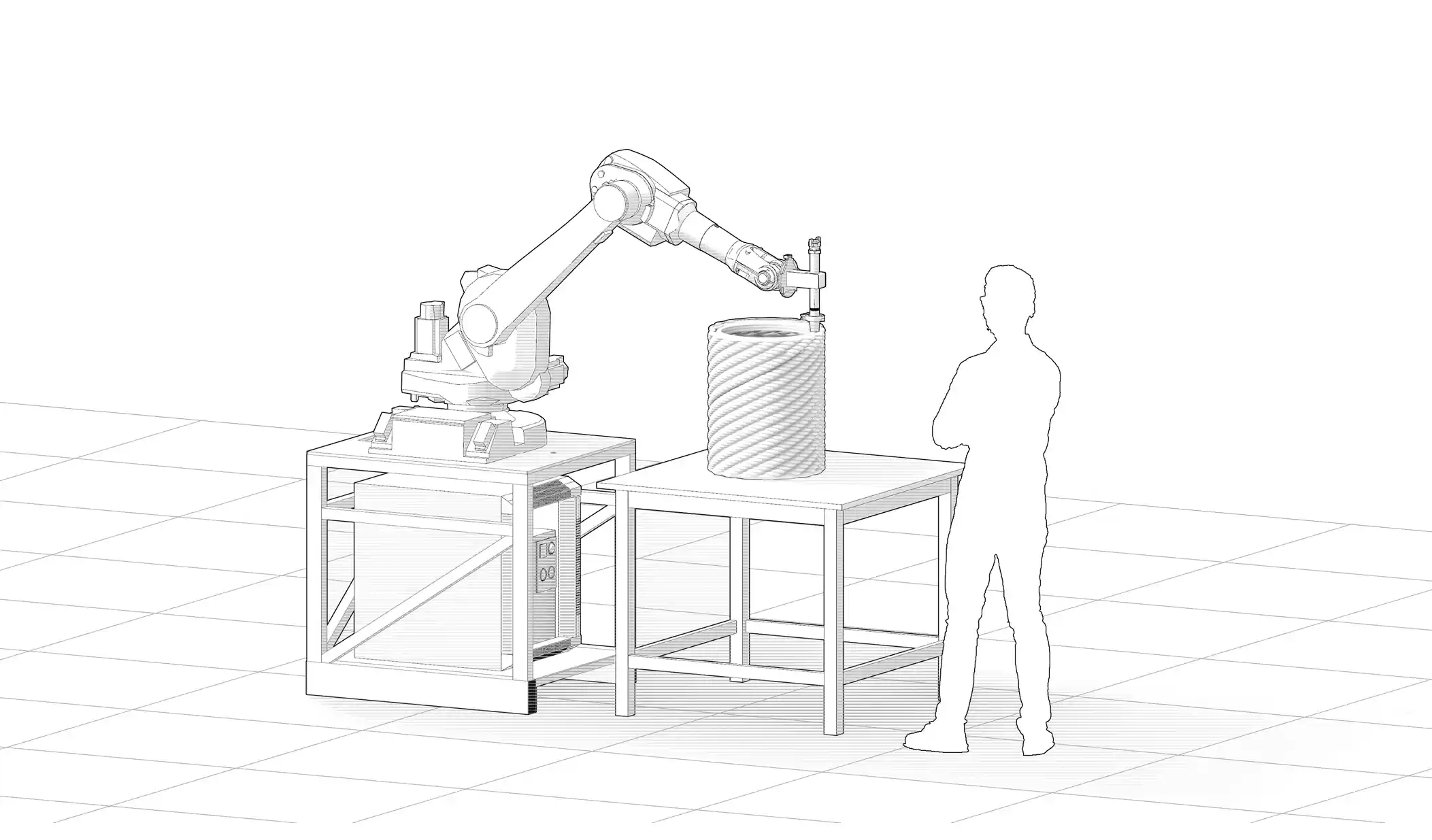
LabCell
The footprint of a europallet, a standard 230 V supply and no installation. Built for research labs.
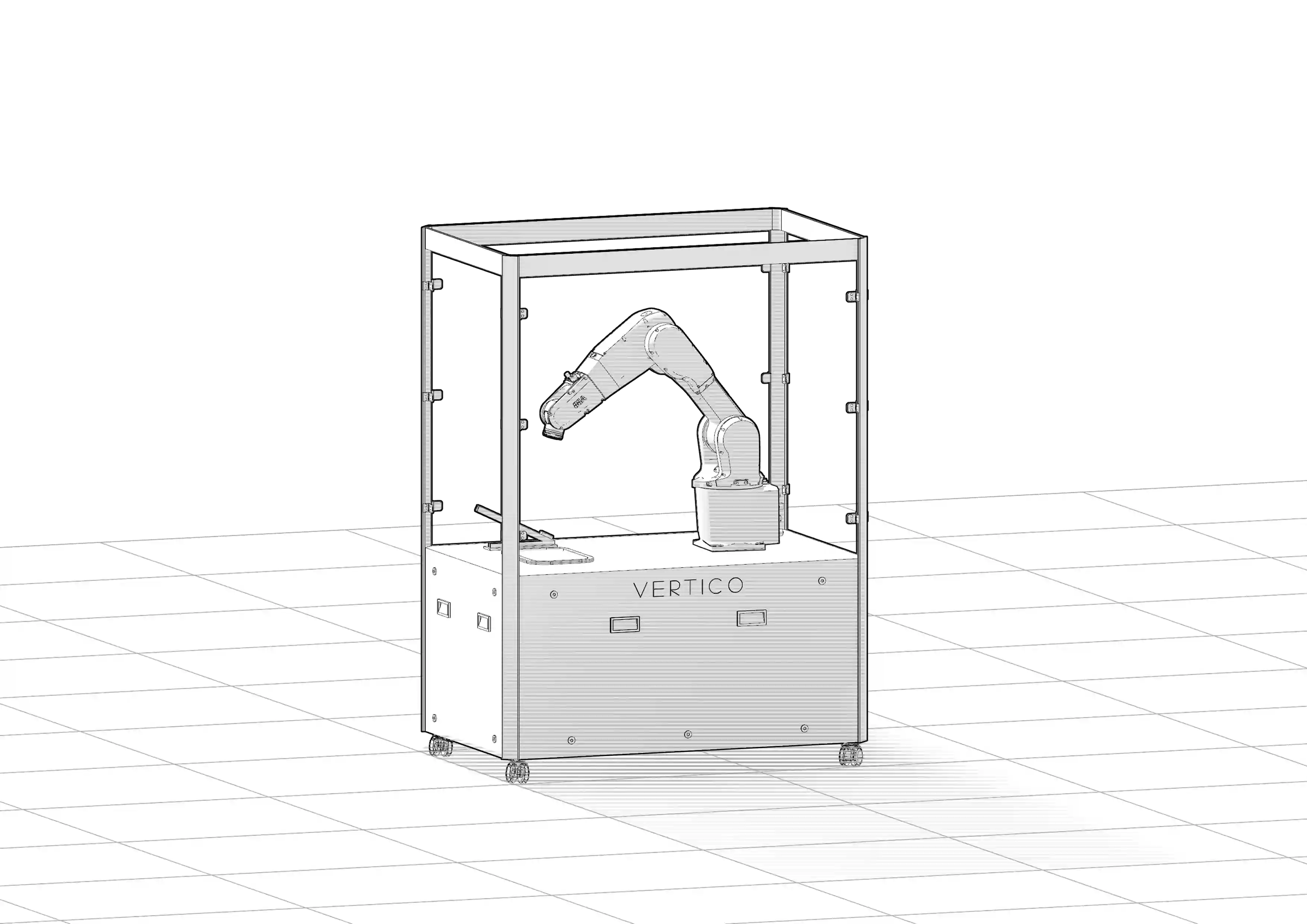
EduCell
An enclosed teaching cell with gripper, pen holder and TCP cone for classes in robotic fabrication.
Printheads
Two ways to print concrete. The Accelerator hardens the material at the nozzle for fine detail and overhangs up to 60 degrees; the Standard prints pre-mixed concrete for large, simple elements.
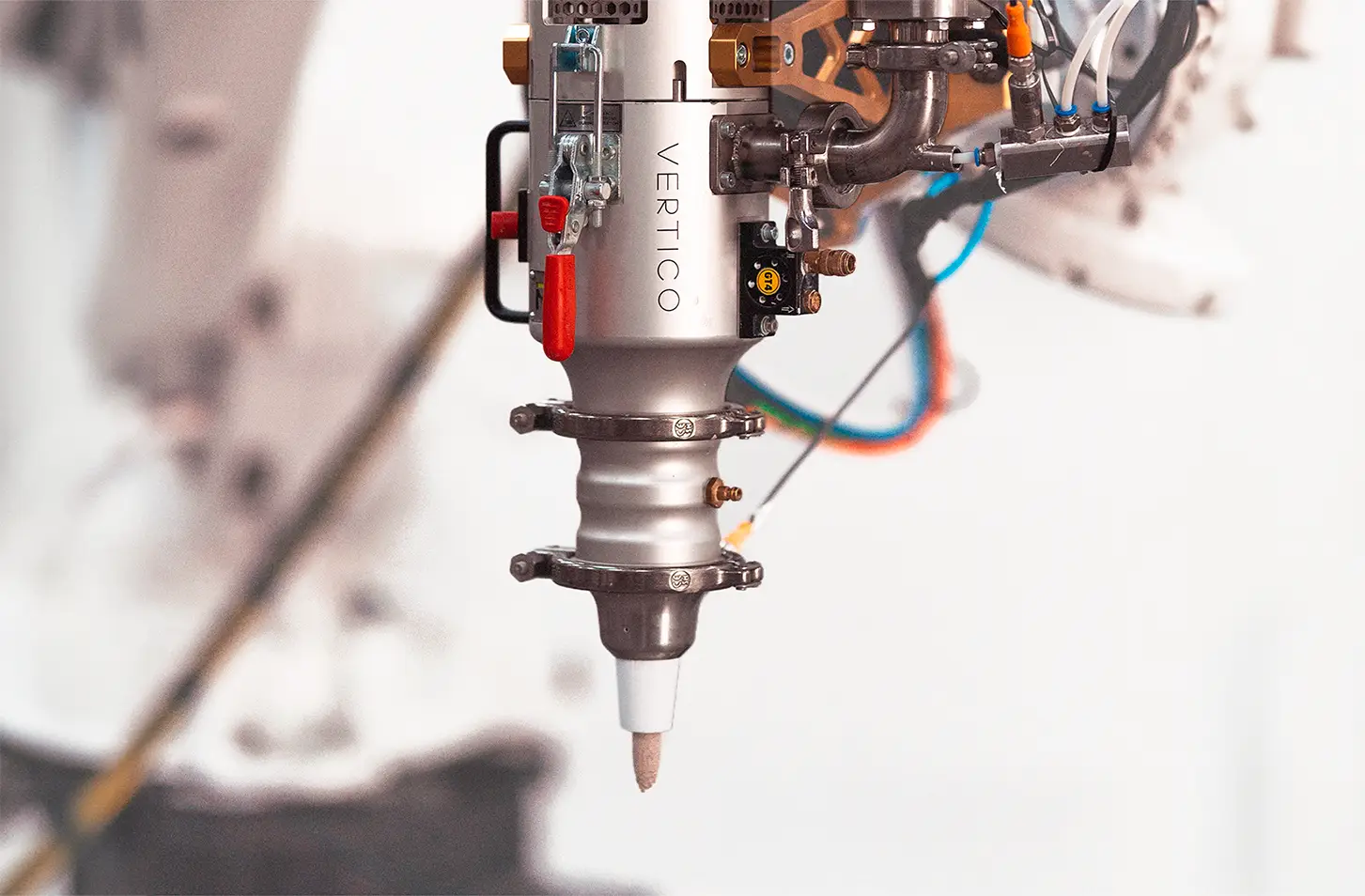
Printheads
Accelerator Printhead (2K)


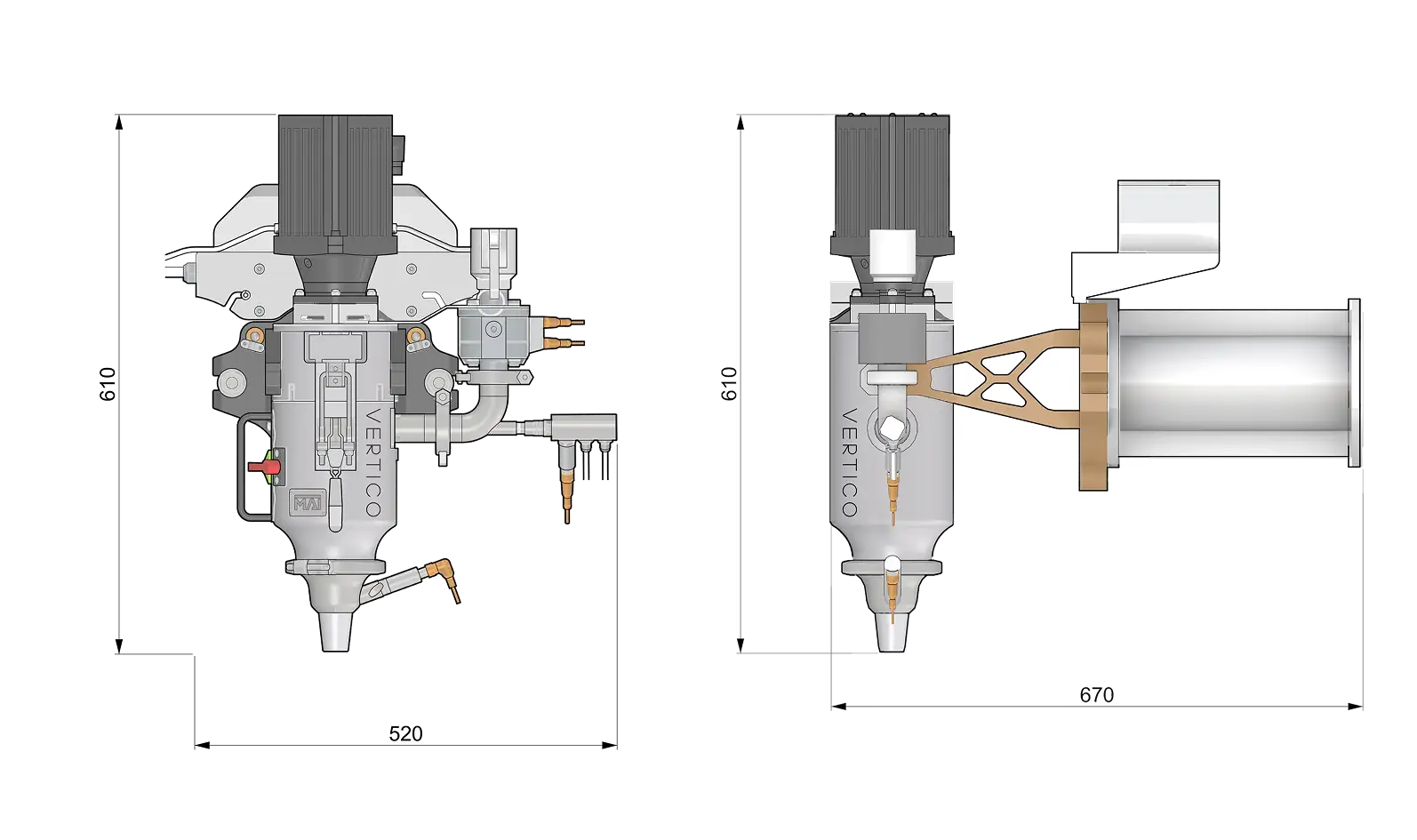
A liquid accelerant hardens the concrete in seconds, for full form freedom. Its patented mixing head keeps every layer consistent.
Standard Printhead (1K)


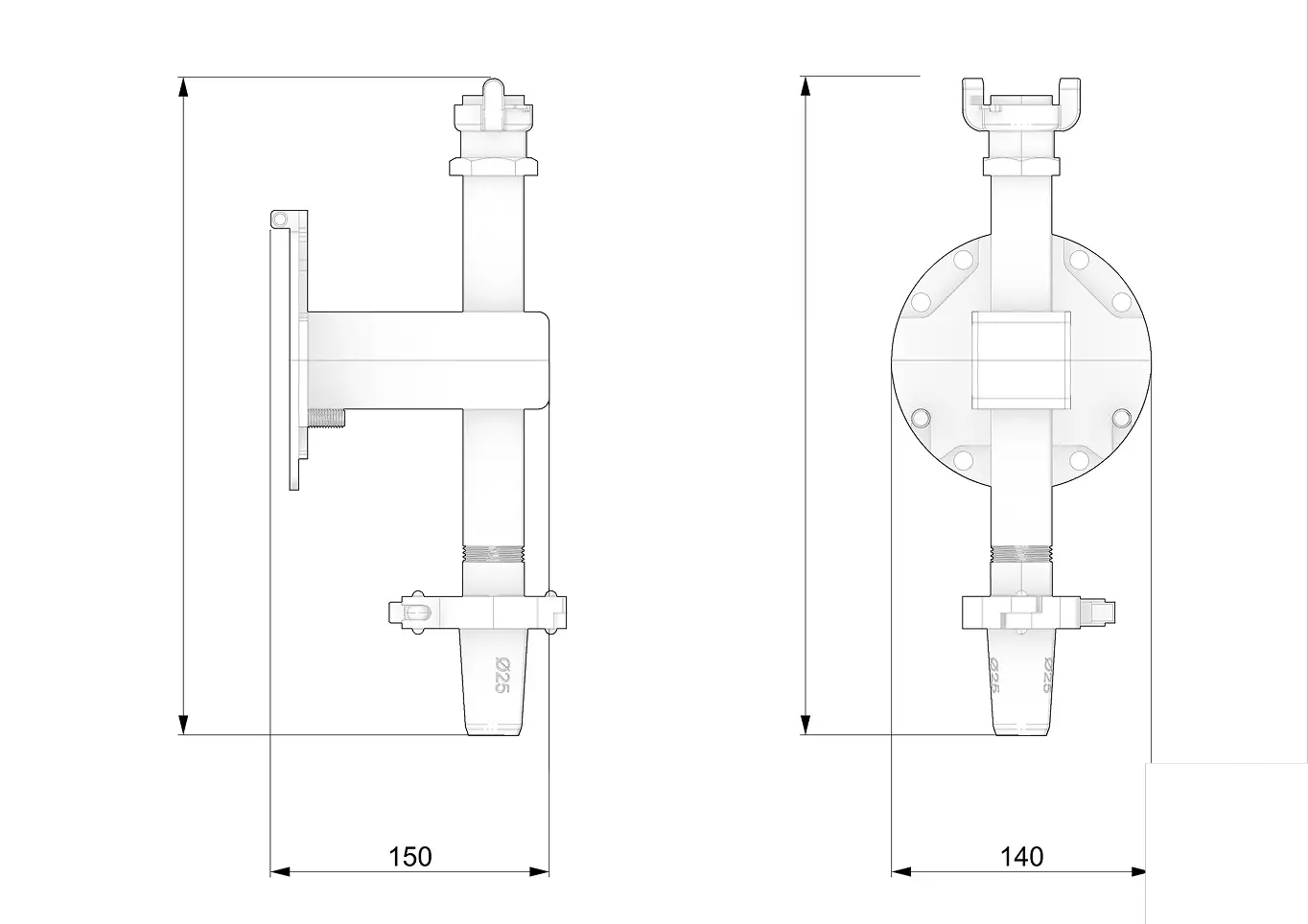
Pre-mixed concrete that sets slowly, ideal for large structures like walls and tanks. Works with any material supplier.
Compare printheads
Standard or Accelerator?
1KPick the Standard for large, simple elements like walls and water tanks.
2KPick the Accelerator for detail, overhangs and complex design pieces.
Robots
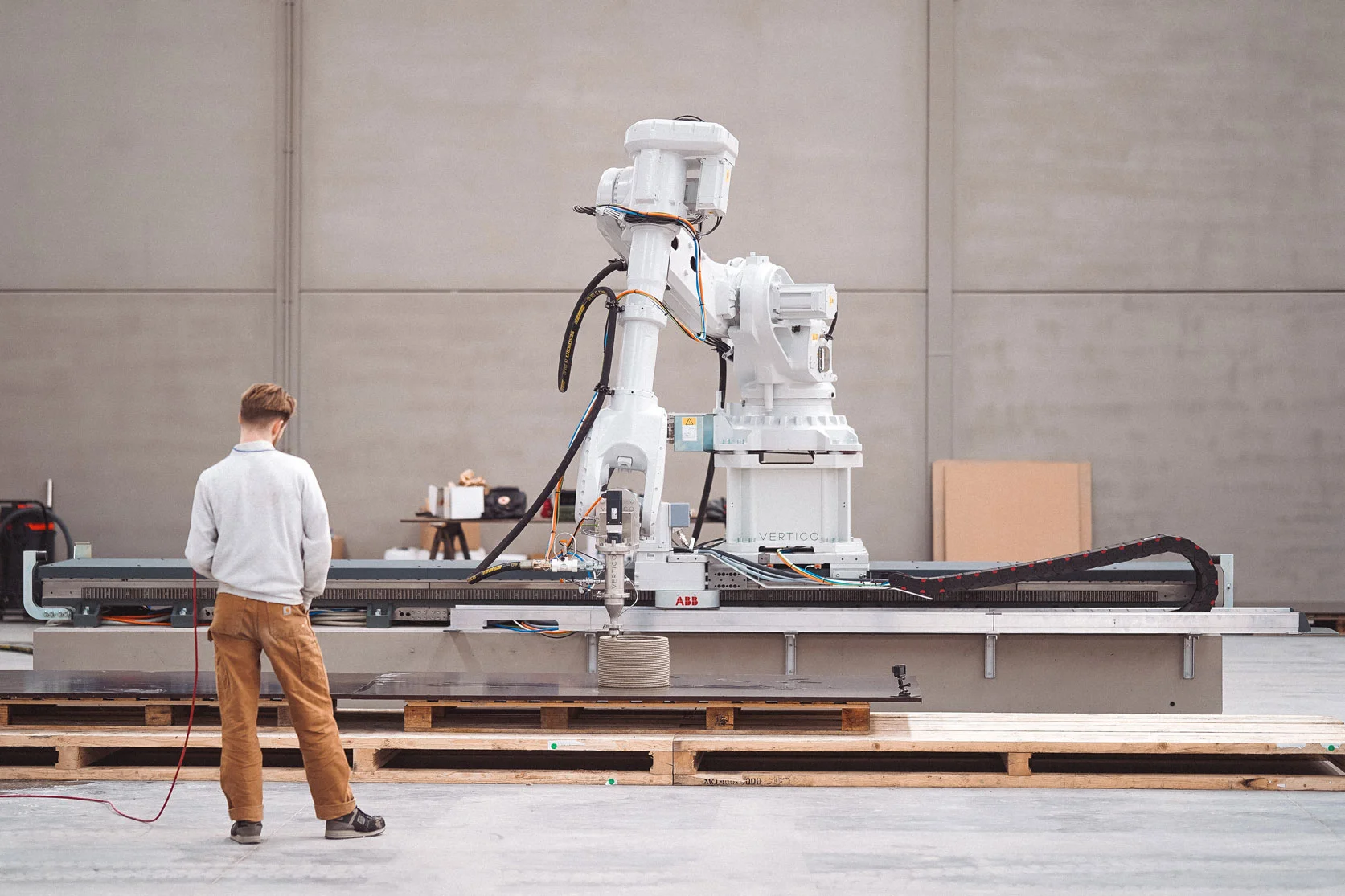
Five robots, from a full system on a rail to a cell for the classroom.
Robots
Choose by the space you have, what you want to print and your budget.
On track


A 3.2-meter reach on a rail, printing continuous spans of 10 meters or more with the Accelerator or the Standard printhead.
Solo


Vertico’s most powerful setup, on a pedestal for extra height and safety, and available with different robot brands.
Compact


For low ceilings: a 2.05-meter reach and a 60 kg payload, with the Accelerator or the Standard printhead.
LabCell


A portable 6-axis printer for universities and research labs. No installation, it runs on 230 volts.
EduCell


Robotic fabrication for the classroom: printheads, grippers and tools for safe, hands-on learning, with ready-to-use software.
Software
The Vertico Slicer turns your designs into robot code with no license fee; the HMI runs and adjusts every print live.

Software
Slicer


Built in Rhino and Grasshopper, it turns your design into robot code, with full control from file to printed piece.
HMI
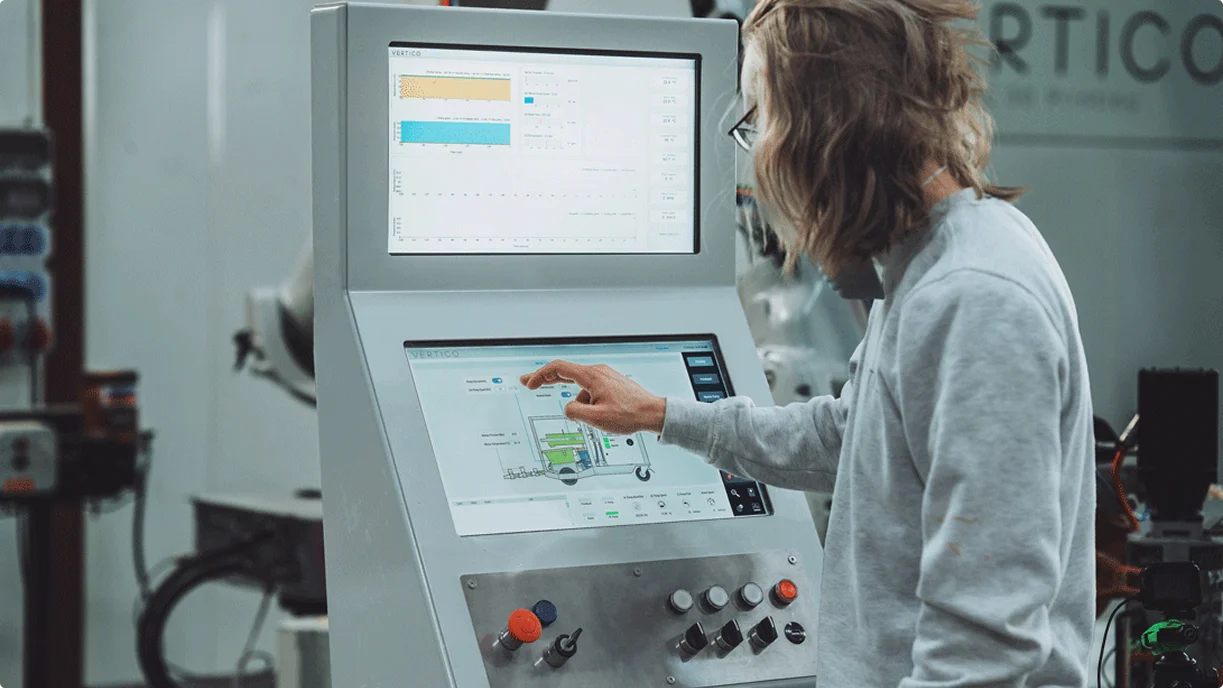

One control stand for all the hardware, with live monitoring, step-by-step instructions and print data stored in the cloud.
Upgrades
Add what your work needs
Add them now or later. Tap one to see what it changes.
- ColourPigment injected at the nozzle: solid tones, stripes or gradients, layer by layer.
- MillingA milling tool smooths the printed surface, cuts sharp edges and precise connections.
- Height extensionRaises the robot to print taller elements.
- Rotating printheadKeeps a shaped nozzle oriented along the path for clean textures and patterns.
- Start/StopPauses and restarts the flow, so one job can print several pieces.
Getting started
From installation to first print
Your team prints from day one.
Configure
Robot, printhead and software, with the upgrades you need.
Ship
The system is shipped worldwide.
Install
The Vertico team sets it up on site.
Train
Your operators learn the system before the first print.
Your first prints, with Vertico support.
Global presence
Expanding the concrete 3D printing network worldwide

Builders, manufacturers and universities already printing with Vertico





Concrete 3D printer FAQ
The questions buyers ask us most. For anything else, talk to an expert.
How much does a concrete 3D printer cost?
Every Vertico system is configured around your project: the robot, the printhead, the software and the upgrades you need. That is why we quote each setup individually. Talk to an expert to get a price for yours.
Which printhead do I need: Standard (1K) or Accelerator (2K)?
Pick the Standard (1K) for large, simple elements like walls and water tanks: it prints pre-mixed concrete that stays workable for more than 30 minutes. Pick the Accelerator (2K) for detail, complex design pieces and overhangs up to 60 degrees: an accelerant hardens each layer at the nozzle in about 30 seconds.
Which robot fits my space?
The Robot on Track has a 3.2 m reach on a rail and prints continuous spans of 10 m or more. Solo stands on a pedestal and prints 270 degrees around its base. Compact works in rooms with ceilings from 2.7 m, with a 2.05 m reach. LabCell has the footprint of a europallet and runs on a standard 230 V supply. EduCell is an enclosed cell for teaching robotic fabrication.
Can I use my own concrete mix or supplier?
Yes. Both printheads work with Vertico's own mix, a partner mix or your own, from any supplier. The Standard takes a maximum grain size of 3 to 4 mm and the Accelerator 3 mm.
Can a concrete 3D printer build houses?
Vertico systems print building elements such as walls, columns and water tanks. The Standard (1K) printhead is made for this kind of large-scale work, with the Robot on Track or Solo, and Solo on a mobile base prints directly on site. See 3D concrete printing for construction.
Is the software included?
The Vertico Slicer has no license fee. It runs in Rhino and Grasshopper and turns your design into robot code. The HMI then runs and adjusts every print live from one control stand.
How do delivery, installation and training work?
We ship worldwide: 61 printers sold in 27 countries so far. The Vertico team installs the system on site, trains your operators before the first print and stays on hand with support afterwards.
Can I add colour, milling or other upgrades later?
Yes. Colour, milling, a height extension, a rotating printhead and start/stop can be added when you buy the system or at any point later.
How long does 3D printed concrete take to cure?
With both printheads, printed concrete cures in 7 to 14 days and reaches full strength after 28 days.
Dive into the new era of design with Vertico
Discover Vertico's state-of-the-art concrete 3D printing solutions that turn visionary ideas into reality.